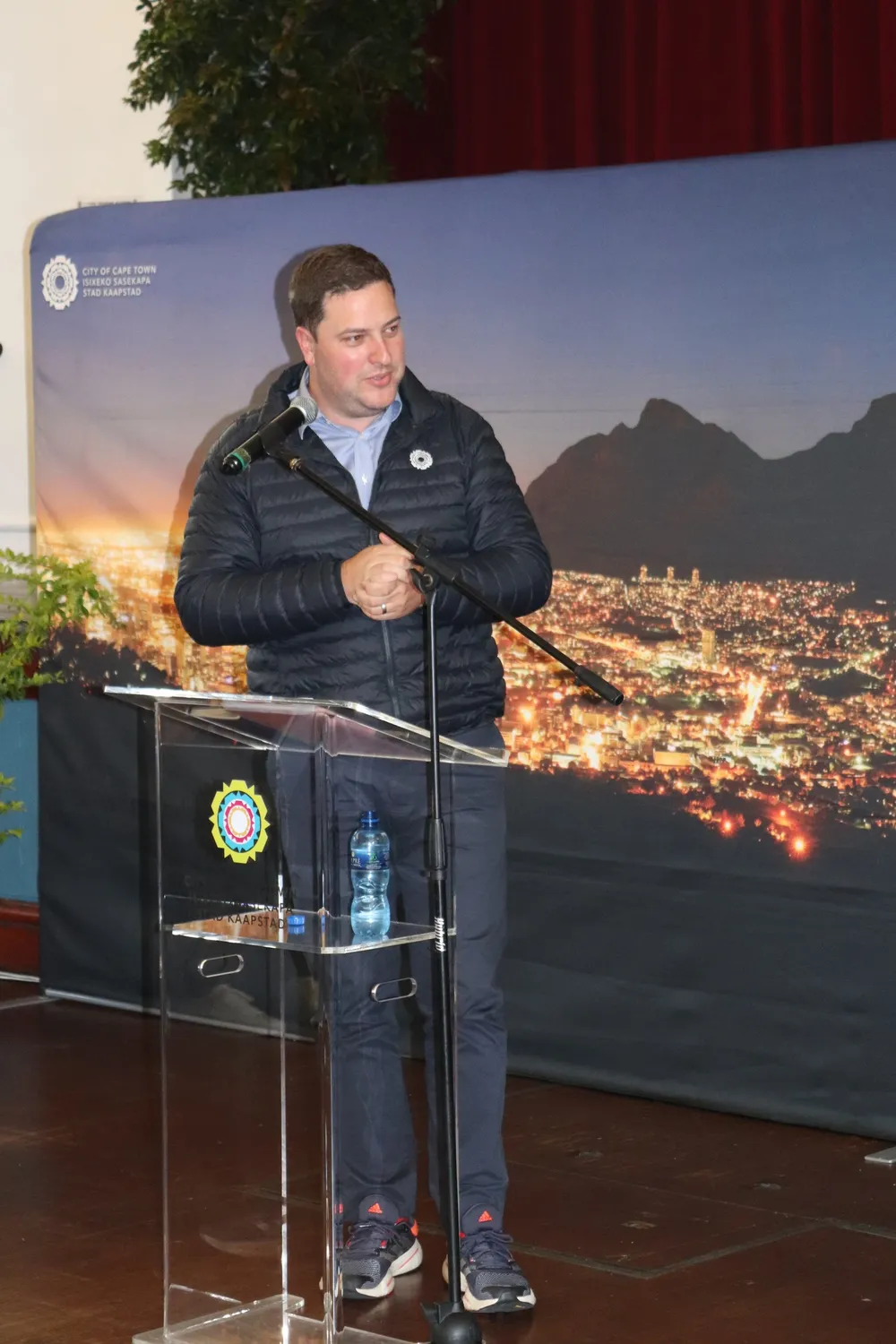
Mayor addresses crime, homelessness, densification
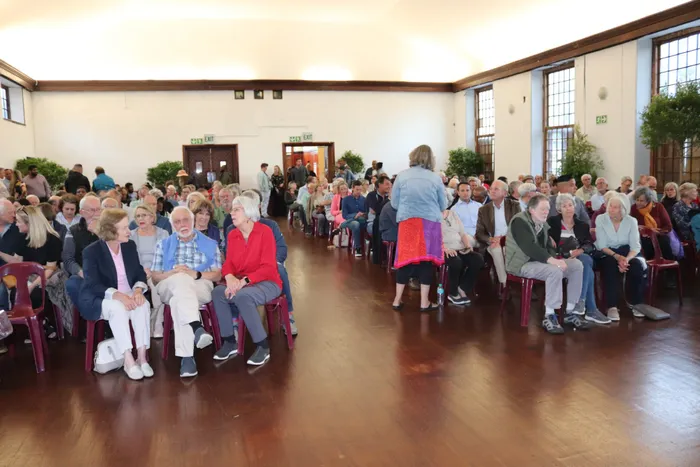
Residents filled the Claremont civic centre for the meeting with the mayor.
Crime, homelessness and densification were the main issues discussed during a packed public meeting with mayor Geordin Hill-Lewis at the Claremont civic centre, on Wednesday November 4.
While crime was the primary responsibility of SAPS, the City had responded proactively to deteriorating policing by deploying 1300 extra municipal police officers to crime hot spots, said Mr Hill-Lewis.
“Cape Town is the only city where crime has come down in the past financial year. Not to say that communities will immediately feel the effects of these statistics,” he said.
The City had also invested in crime technology and a 24/7 high patrol unit had been launched last Thursday, he said.
“We have invested in body and dashboard cameras, gunshot echo locators, aerial surveillance and a dedicated technological team who can assist us in finding better ways to integrate technology to fight crime.
“It will take time to feel the effects of all these measures. Crime is not that simple, and we need to constantly look at different ways to effectively fight crime.”
Turning his attention to the issue of homelessness, which has mushroomed across the city in the wake of the pandemic, he said: “No one in South Africa may be removed from any structure without an eviction order from the court and offering alternative accommodation in the vicinity of the eviction.”
The City had budgeted R155 million to build accommodation for the homeless, with one near completion, one about to start and three others in the pipeline, he said.
The accommodation would provide an extra 1000 shelter beds, with two hot meals a day, a nurse and social worker, training and job placement programmes and basic services to the homeless at the City’s cost.
“We have seen a great deterioration in our public spaces and the loss of some public spaces. With this we want to show the homeless we care, try to get them to take up alternative accommodation voluntarily and get the treatment and care they need for whatever addiction they might be dealing with and reintegrate them into society.”
Speaking on densification and population growth, Mr Hill-Lewis said 108 000 people had moved to Cape Town last year alone and the trend was going to accelerate with an expected 1.8 million people expected to move to the city in the next decade.
“We understand that there are valid criticisms, but sometimes we do get it wrong when considering the size of the population. The growth of rates bases versus that of our growth population shows you in stark terms how the population is growing significantly faster than ratepayers - hence the constant pressure to keep up with basic services and infrastructure across the city.
“Cape Town in 20 to 50 years will be a much denser city going from a medium-sized city to a mega metropolis, especially if we can get onto our own power supply,” he said.
Mr Hill-Lewis said the budget would need to be adjusted to keep up with growing infrastructure needs.
“We have the financial muster to invest more in infrastructure thanks to sound financial management. We are feeling the pressure on our systems and we see the need for much greater investments.”