Stargazing study shows promise for improving mental health in South Africa
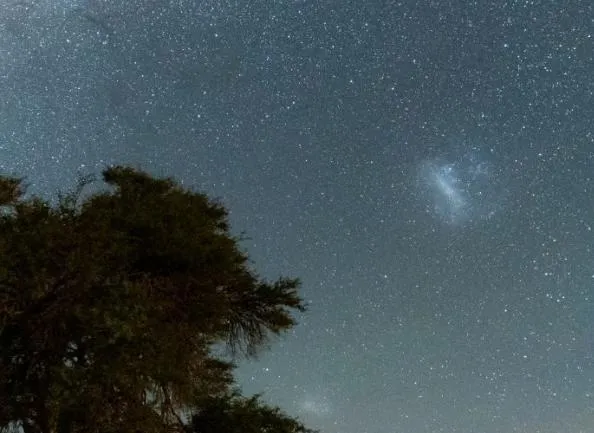
Researchers from Stellenbosch University and the International Astronomical Union Office of Astronomy for Development (IAU OAD) are uncovering how stargazing experiences can reduce stress, improve mood, and strengthen social connection.
Image: Supplied
A pioneering South African research project is turning to the night sky to address rising mental health challenges, with early findings showing that stargazing can reduce depression and anxiety while strengthening social connections.
Researchers from Stellenbosch University’s CoCREATE Health Hub and the International Astronomical Union’s Office of Astronomy for Development (IAU OAD) are leading the initiative to scientifically examine how awe, nature immersion, and “cosmic perspective-taking” influence emotional well-being.
The project, Astronomy for Mental Health, explores how structured stargazing sessions, from community gatherings to overnight retreats, can support mental health.
The research builds on Stephen Kaplan's Attention Restoration Theory, which suggests that gentle, sensory environments help the brain recover from mental fatigue. The night sky, researchers say, offers “soft fascination” - a calming, restorative form of attention that requires no effort.
The team is also exploring how stargazing induces a version of the “Overview Effect,” the profound emotional shift astronauts report when viewing Earth from space. By encouraging people to look up and reflect on their place in the universe, researchers hope to inspire similar feelings of perspective, calm, and connectedness.
Fourteen families recently attended a guided astronomy weekend in Sutherland, a home to some of the world’s darkest night skies and the Southern African Large Telescope (SALT). Participants viewed Saturn’s rings, lunar craters, and the Milky Way and took part in reflective discussions around a fire.
Within 24 hours, participants reported reduced anxiety, lower depressive symptoms, and improved mood, measured through self-report questionnaires, journaling, interviews, and focus groups.
One of the lead researchers, Professor Lynn Hendricks, said the effect goes beyond rest or escape.
“If the effect was only about escape or rest, we would expect a similar response after any weekend break. What we are finding, though, is that the cosmic element, the vastness, the awe, creates a shift that’s distinct. It does not just calm people; it changes how they think about themselves and their place in the world.”
Participants also described:
A sense of “mental spaciousness”
A calmer, clearer mind
Stronger family connection
Greater perspective on life’s challenges
Dr Therese Fish, Stellenbosch University’s vice-dean of clinical services and social impact, said the project offers a vital alternative in communities with limited mental-health services.
“Through this collaboration, we are creating new ways for people to find healing outside of clinical settings. Families are reconnecting not just to each other, but to the environment and to a shared sense of humanity,” she said.
IAU OAD director Kevin Govender added that astronomy has always promoted deep reflection.
“Now we are learning it can also help us sit with the big questions, quietly, together, under the same sky.”
The project will run until 2029 and will expand to include youth programmes, urban stargazing circles, and both psychological and physiological measurements. Researchers aim to compare experiences across different environments to understand which conditions most benefit mental health. A paper on the preliminary findings is expected by the end of 2025.