Digital voucher pilot offers cashless support for people experiencing homelessness
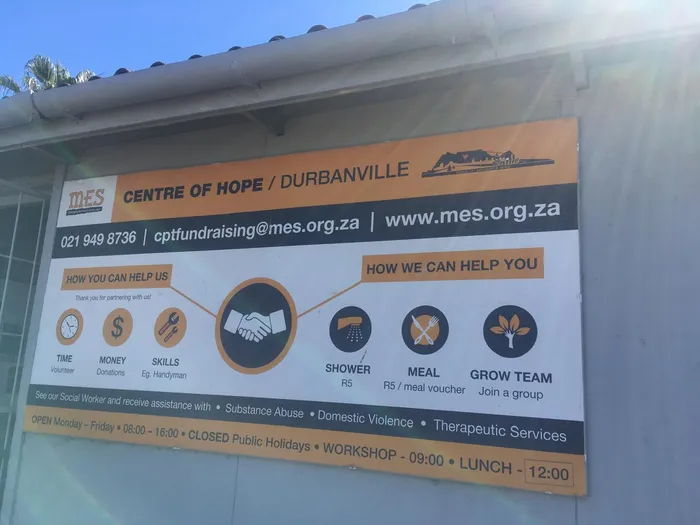
Mi-change, a voucher system aimed at reducing cash-based giving and promoting long-term rehabilitation, has launched a pilot programme at U-turn’s Homeless Service Centre in Claremont and the Mould Empower Serve (MES) centre in Durbanville.
Image: Northern News
A new digital initiative is changing the way South Africans can support people living on the streets.
Mi-change, a voucher system aimed at reducing cash-based giving and promoting long-term rehabilitation, has launched a pilot programme at U-turn Homeless Service Centre in Claremont and the Mould Empower Serve (MES) centre in Durbanville.
The system allows members of the public to purchase R15 digital vouchers via SnapScan, using a QR code linked to a registered participant. The vouchers can then be redeemed at the centres for basic services such as meals, showers, clothing, or a safe night’s rest.
Mi-change national manager Carmen Dickenson said the digital format makes the process simple and immediate for donors.
"Donors can look out for the Mi-change lanyard worn by participants, which will display their individual SnapScan code. This setup allows donors to give directly to someone in the programme, ensuring that every voucher reaches a participant and is used for essentials," she said.
She added that donors can still purchase Mi-change vouchers online in packs or at participating retailers around Cape Town.
"The new digital voucher system is an extension of this approach, designed for people increasingly moving toward cashless payments. In the pilot, donors can give vouchers directly on the street by scanning the code worn on a lanyard by a registered participant.
Earle Jansen, manager of the Durbanville MES Safe Space, confirmed that they have identified 10 clients who will participate in the pilot phase. He said that risk factors involved were taken into consideration during the planning of the project.
"I know that most of the public is not yet informed, but we did manage to distribute posters and digital flyers. We also spoke at some of the community police forums and neighbourhood watch meetings to update the public about this new pilot project.
"We want to educate the public so that they don't see it as a scam. When you scan the code, the picture of the client will pop up to verify that this is the correct person, to eliminate the risk factor. It is compulsory that the pictures of the registered clients is taken before we issue a lanyard," he said.
The pilot was developed in partnership with behavioural research organisation ideas42 and forms part of a broader collaboration between U-turn, MES, and the Citi Foundation.
Mi-change plans to roll out the system to additional U-turn and MES centres across Cape Town in the new year, with the long-term aim of extending it to other regions.
Ms Dickenson said: "By reducing street solicitation and limiting cash on the streets, which can often fuel addiction and dependency, digital Mi-change vouchers offer a safe, practical way to meet essential needs, while connecting individuals with support services. This gives donors the confidence that their contribution is being used responsibly, rather than funding addictive or harmful behaviour.”
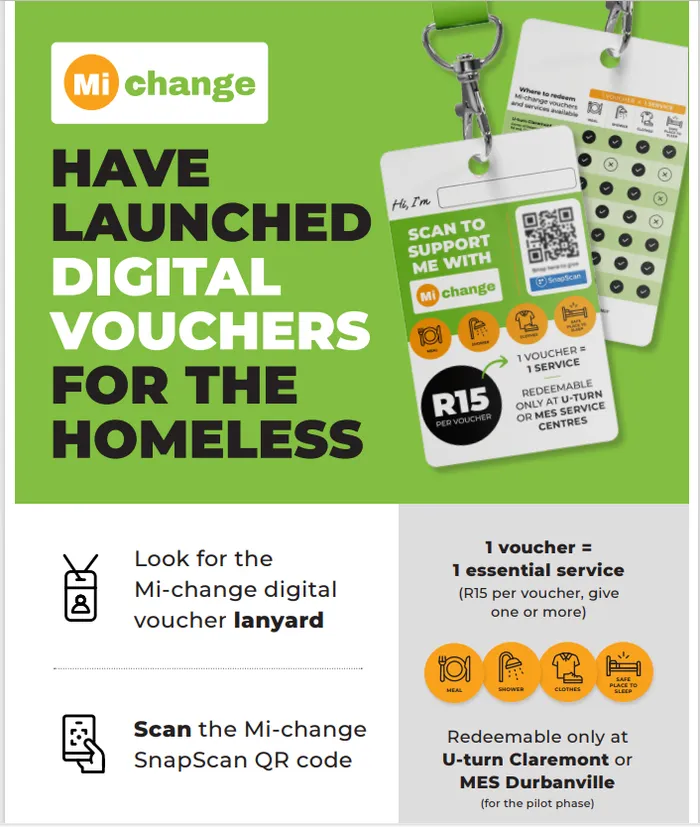
The voucher system allows members of the public to purchase R15 digital vouchers via SnapScan, using a QR code linked to a registered participant. The vouchers can then be redeemed at the centres for basic services such as meals, showers, clothing, or a safe night’s rest.
Image: Supplied