Court orders eviction of long-time District Six residents, sparking community fears
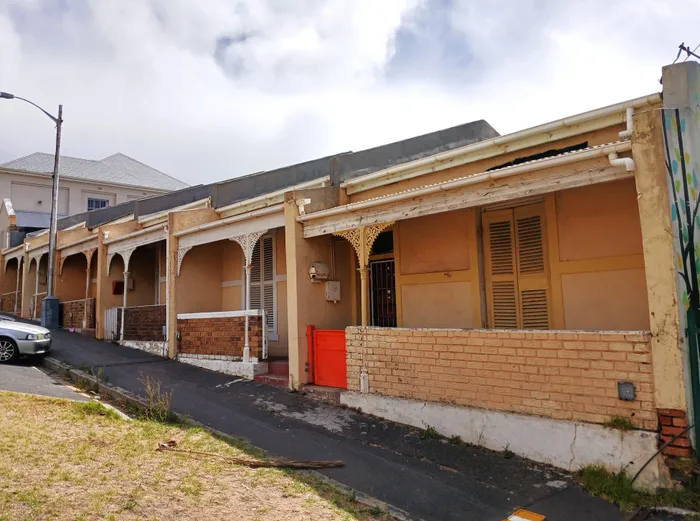
Five families staying in the Searle Street cottages have been ordered by the court to vacate the property at the end of February.
Image: Wesley Ford
Five families living in the Searle Street cottages in District Six face an uncertain future after the Cape Town Magistrate’s Court ordered their eviction by the end of February.
In December, Acting Magistrate Juan de Pontes granted an eviction order in terms of the Prevention of Illegal Eviction from and Unlawful Occupation of Land Act (PIE) in favour of the property owner, private developer Ettiene du Toit.
According to the 21-page court order, the families must vacate the properties by Saturday, February 28. A court-authorised sheriff is set to carry out the eviction on Friday, March 6.
For many residents, the cottages are the only homes they have ever known.
Mildred, 69, who requested that only her first name be used, said she was born in the house and now lives there alone. She survives on a pension and said the ruling has deeply affected her.
“This judgment is a huge blow and very unfair. At this time of my life, I just want peace and do not want to stress about things,” she said.
Growing up in District Six, Mildred attended Holy Cross Primary School and later Zonnebloem Girls Primary.
The court order requires the City of Cape Town to provide temporary emergency accommodation for the families. However, residents fear they may be relocated far from the area, to areas such as Mfuleni or Wolwerivier. “That would take us away from everything we know,” Mildred said.
Another resident, Vanessa Collison, 57, said the eviction process has taken a heavy emotional and physical toll on the families. Like Mildred, Ms Collison was also born in the cottage where she still lives.
“This whole process has affected all of us deeply,” she said. “We’ve built a strong sense of community here over the years. It’s not just our homes that are being taken away, but our connection to each other.”
Ms Collison added that her ties to the area extend beyond her home. “I belong to Holy Cross Church next door. Our lives are rooted here.”
According to the court documents, the property was purchased by Mr Du Toit in 2014 from the Order of the Sisters of the Holy Cross. The transfer was only registered in his name in 2022 after residents unsuccessfully challenged the sale in the Western Cape High Court.
In his ruling, Acting Magistrate de Pontes stated that the residents failed to provide a valid legal defence against the eviction. The families argued that they were granted lifelong tenure by church officials through an oral agreement. However, the court found this claim to be unreliable and based on hearsay.
In a collective statement, the Searle Street families said they have faced numerous challenges since learning that the properties had been sold. “We have been to court countless times, and this has severely impacted our livelihoods and well-being,” the statement read.
The families appealed to those in positions of power to intervene. “Help us keep our family homes and prevent history from repeating itself. Our fight has always been about preserving the memory of our loved ones who lived in these cottages decades before us. We see it as our duty to preserve their legacy and fight for justice in District Six.”
The Tatler approached Hufke Attorneys, who represent the property owner, who declined to comment.
In an unsigned statement, the City of Cape Town said it had filed a report with the court and offered assistance to the occupants. This includes help in sourcing social housing and housing for elderly residents who qualify. The City also offered to provide an emergency housing kit if required.
However, the City confirmed that it currently has no vacant emergency housing available within the District Six precinct or the Cape Town CBD. Most land in the area is state-owned and reserved for District Six land restitution beneficiaries. The City said it would honour all undertakings made to the court as part of the eviction order.